


一、项目背景与客户概况
该企业位于广东省佛山市顺德区,地处珠江三角洲腹地,属亚热带季风气候,常年高温高湿,夏季平均气温达28-33℃,相对湿度常高于80%。在这种气候条件下,生产环境温湿度的控制尤为关键。顺德作为中国重要的服装产业集聚区,产业链完整,技术先进,拥有较强的行业影响力。客户作为当地老牌服装企业,生产体系成熟,涵盖裁剪、缝制、整烫、质检、包装等完整工艺流程,是区域产业实力的典型代表。
二、厂房结构与车间布局
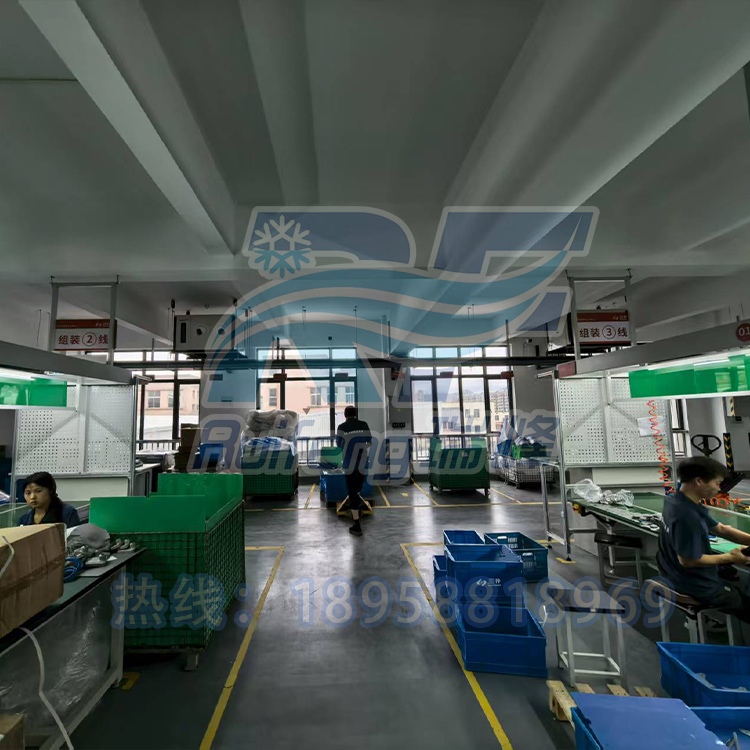
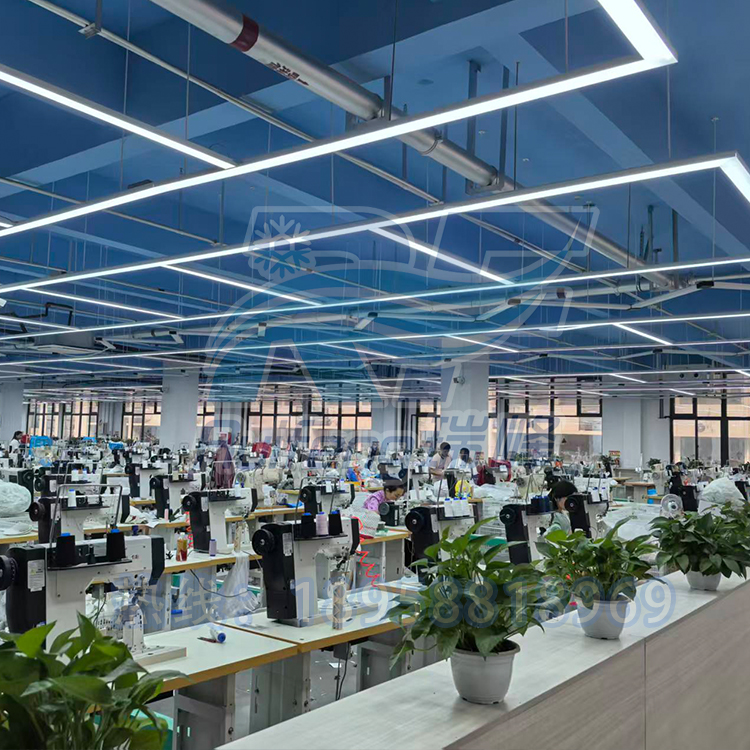
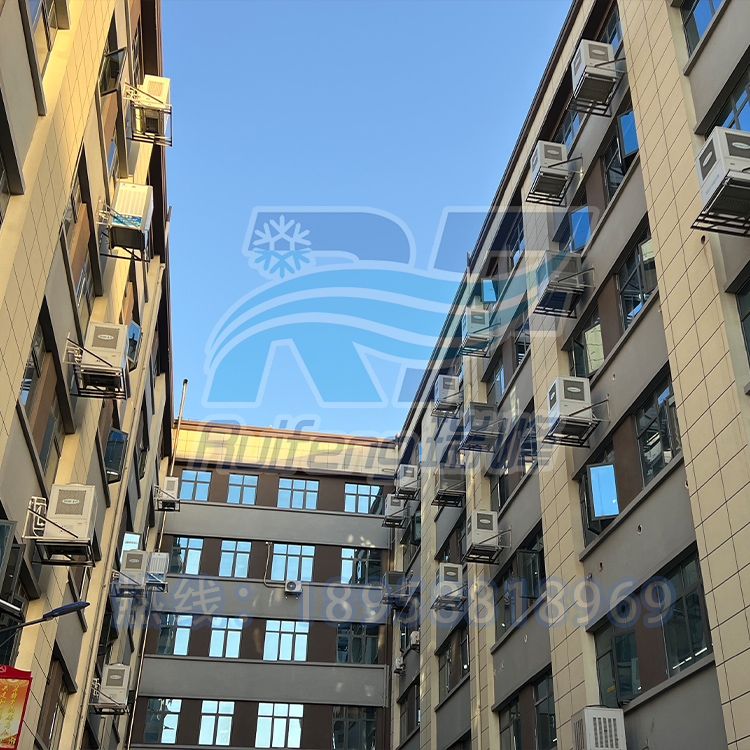
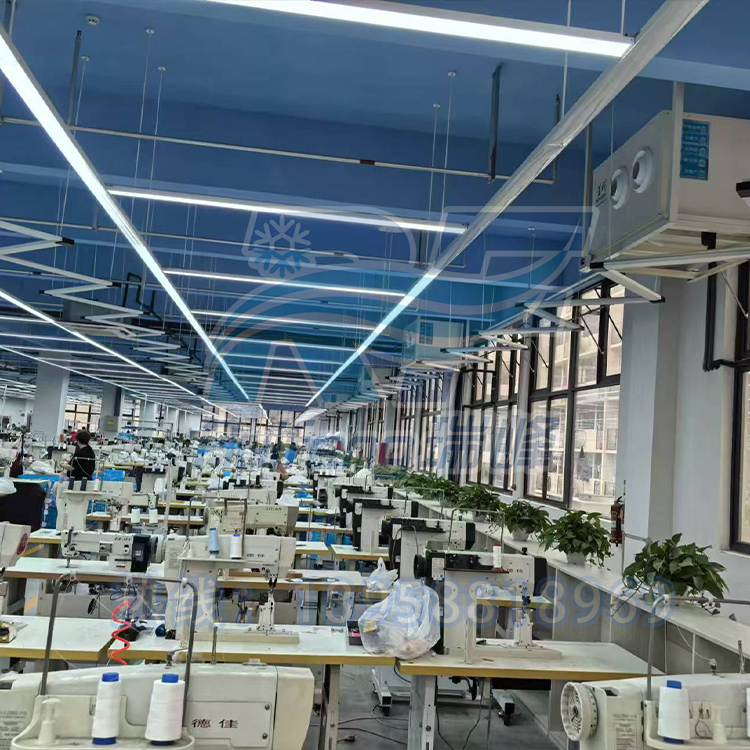
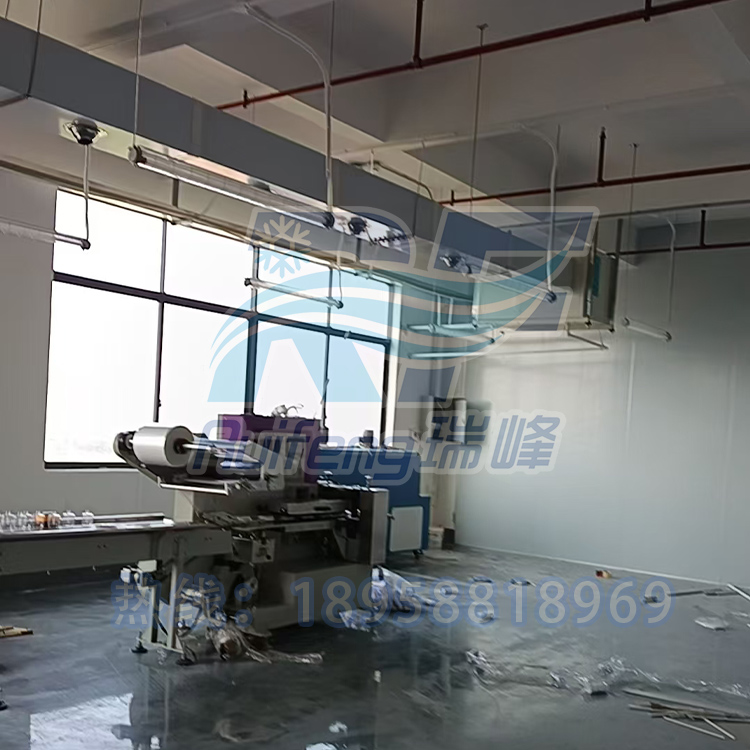
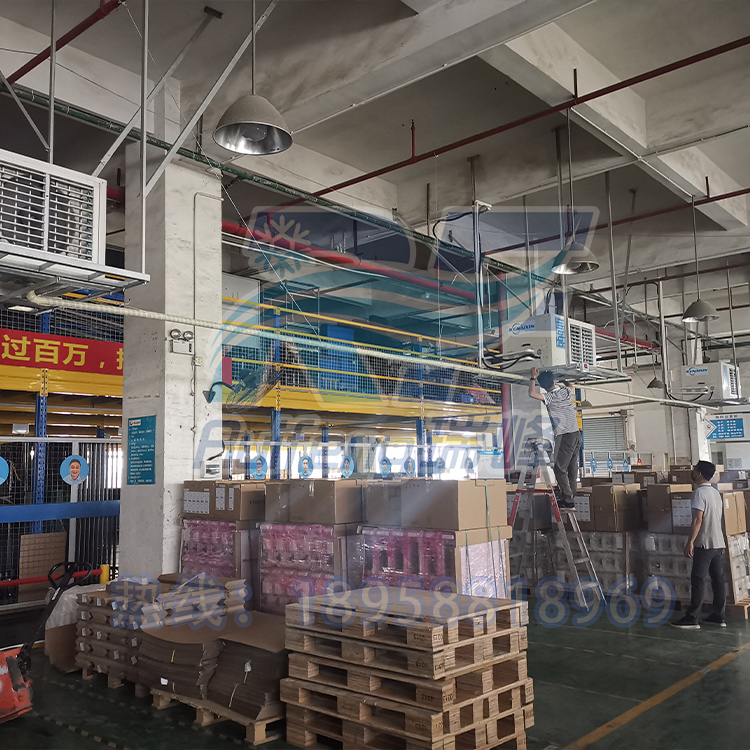
企业拥有新旧两栋多层钢筋混凝土标准厂房,外墙设有大面积采光玻璃窗。根据生产工艺需求,车间按功能分区布置在不同楼层,主要包括:裁床车间、缝制车间、整烫车间、成品检验区、仓储物流区等。
旧厂房受早期设计限制,各车间经隔断后面积较小,约300-500平方米,空间相对局促;
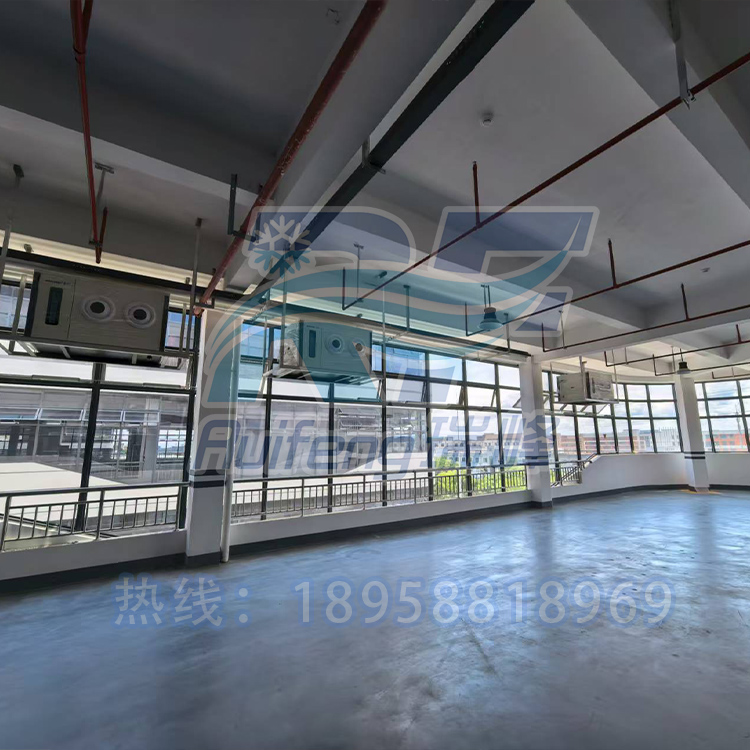
新厂房采用现代化流水线布局,车间开阔贯通,单车间面积普遍超过1000平方米,最大单层空间达3000平方米,大幅提升了生产连贯性与效率。
三、方案设计思路
瑞峰环保制冷技术团队综合考虑以下关键因素,为客户量身定制专业温控解决方案:
1、地理气候特点:针对本地高温高湿环境,需同时实现降温与除湿;
2、建筑结构特征:厂房密封性较好,适合采用内循环气流组织方式的工业空调系统;
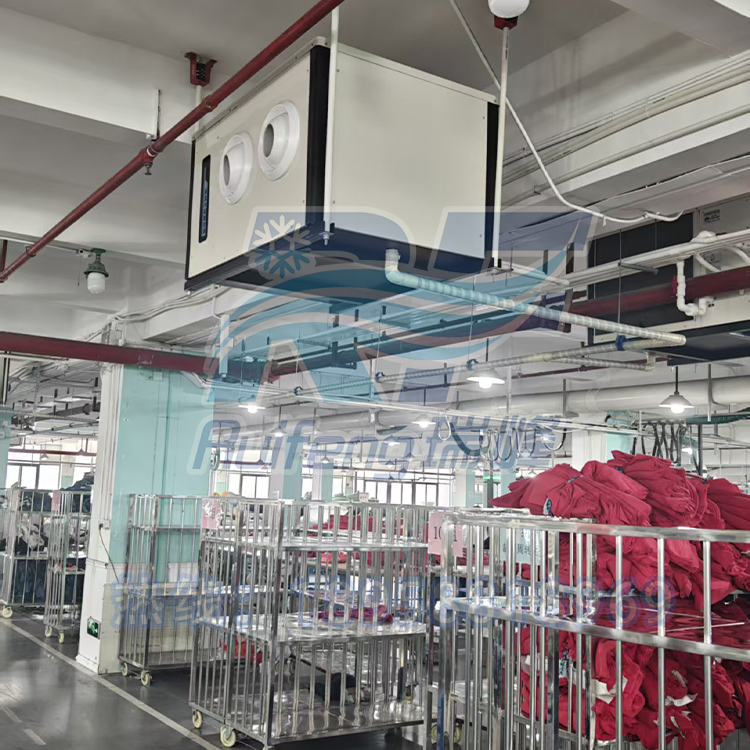
3、空间利用需求:车间地面设备密集,优先选择吊挂式安装,节约地面空间;
4、生产特性:劳动密集型作业,需改善人员工作环境;服装生产对温湿度敏感,面料存储、缝制及整烫环节均需精准的温湿双控。
四、差异化设备选型与实施
基于新旧厂房的结构与需求差异,我们采取了针对性设计:
1、旧厂房:车间面积较小,原有吊扇辅助通风,送风距离要求低。通过精确的冷负荷计算,选用出风柔和、覆盖均匀的轴流式工业省电空调,在实现降温除湿的同时避免强风直吹,提升员工体感舒适度。
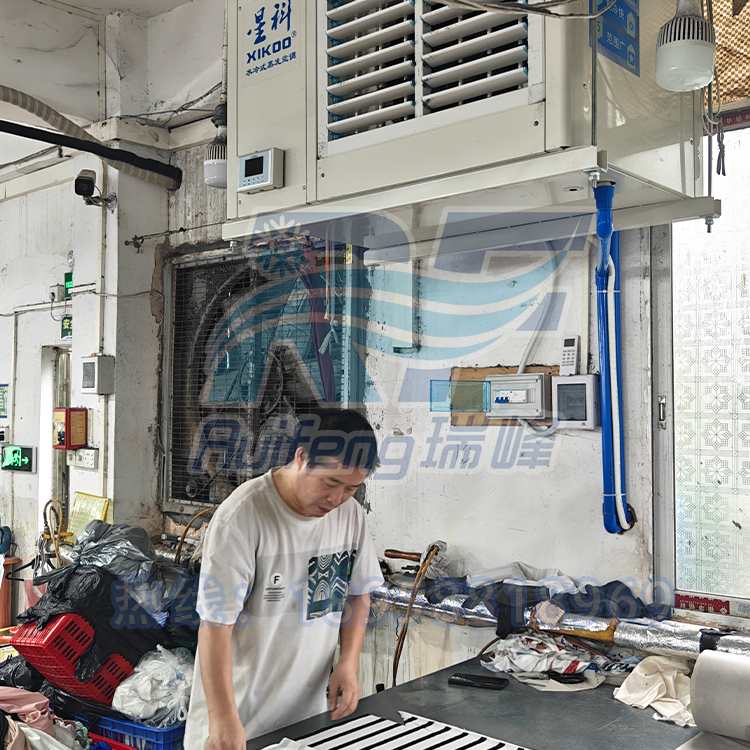
2、新厂房:空间开阔,无辅助通风设备,要求送风距离远、穿透力强。为此选用风力强劲、射程远的射流式工业省电空调,确保冷量有效覆盖整个车间,实现均匀温湿度调控。
五、项目实施效果
系统投入运行后,不仅显著降低了车间温度,更将湿度稳定控制在工艺要求范围内,取得了多方面成效:
1、员工工作环境得到根本改善,体感舒适度大幅提升,有助于保持专注与工作效率;
2、生产稳定性增强,面料不易受潮变形,缝制线迹平整,整烫定型效果更佳;
3、产品良品率显著提高,减少了因温湿波动引起的质量损耗,为企业降本增效提供了可靠保障。
六、项目意义与行业借鉴
本项目虽针对服装企业,但其设计思路同样适用于电子装配、食品加工、仓储物流等具有大面积空间、劳动密集且对环境温湿度有要求的行业场景。
尤为值得一提的是,本案通过对同一企业内不同车间条件的精细化分析,展示了因建筑结构、空间布局、工艺特点差异而进行差异化设备选型的工程设计理念,为同类复合型厂房空调系统规划提供了有价值的参考范例。
1、 Project Background and Customer Profile
The enterprise is located in Shunde District, Foshan City, Guangdong Province, and in the hinterland of the the Pearl River Delta. It has a subtropical monsoon climate, with high temperature and humidity throughout the year. The average temperature in summer is 28-33 ℃, and the relative humidity is often higher than 80%. Under these climatic conditions, the control of temperature and humidity in the production environment is particularly crucial. Shunde, as an important clothing industry cluster in China, has a complete industrial chain, advanced technology, and strong industry influence. As a well-established clothing enterprise in the local area, the customer has a mature production system that covers complete process flows such as cutting, sewing, ironing, quality inspection, and packaging. It is a typical representative of regional industrial strength.
2、 Factory structure and workshop layout
The enterprise owns two multi story reinforced concrete standard factory buildings, old and new, with large areas of skylight glass windows on the exterior walls. According to the production process requirements, the workshop is arranged on different floors according to functional zoning, mainly including: cutting workshop, sewing workshop, ironing workshop, finished product inspection area, warehousing and logistics area, etc.
The old factory building is limited by early design, and the area of each workshop after partition is relatively small, about 300-500 square meters, with relatively limited space;
The new factory adopts a modern assembly line layout, with spacious and interconnected workshops. The area of each workshop generally exceeds 1000 square meters, and the maximum single floor space reaches 3000 square meters, greatly improving production continuity and efficiency.
3、 Design concept of the scheme
The Ruifeng Environmental Protection Refrigeration Technology Team comprehensively considers the following key factors and customizes professional temperature control solutions for customers:
(1). Geographical and climatic characteristics: In response to the local high temperature and high humidity environment, it is necessary to achieve both cooling and dehumidification simultaneously;
(2). Architectural structural features: The factory building has good sealing and is suitable for industrial air conditioning systems that use internal circulation airflow organization;
(3). Space utilization requirements: The workshop ground equipment is dense, and hanging installation is preferred to save ground space;
(4). Production characteristics: labor-intensive operations that require improvement in the working environment for personnel; Clothing production is sensitive to temperature and humidity, and precise temperature and humidity control is required for fabric storage, sewing, and ironing processes.
4、 Differentiated equipment selection and implementation
Based on the structural and demand differences between the old and new factory buildings, we have adopted targeted design:
(1). Old factory building: The workshop area is relatively small, and the original ceiling fan assisted ventilation has low requirements for air supply distance. By accurately calculating the cooling load and selecting axial flow industrial energy-saving air conditioners with soft air outlet and uniform coverage, we can achieve cooling and dehumidification while avoiding strong wind blowing directly, improving the comfort of employees.
(2). New factory building: spacious, without auxiliary ventilation equipment, requiring long air supply distance and strong penetration. For this purpose, a jet type industrial energy-saving air conditioner with strong wind power and long range is selected to ensure effective cooling coverage of the entire workshop and achieve uniform temperature and humidity control.
5、 Project implementation effect
After the system was put into operation, it not only significantly reduced the workshop temperature, but also stabilized the humidity within the required range of the process, achieving various results:
(1). The working environment for employees has been fundamentally improved, with a significant increase in physical comfort, which helps to maintain focus and work efficiency;
(2). Enhanced production stability, fabric less prone to moisture deformation, smooth sewing seams, and better ironing and shaping effects;
(3). The product yield rate has significantly improved, reducing quality loss caused by temperature and humidity fluctuations, providing a reliable guarantee for enterprises to reduce costs and increase efficiency.
6、 Project significance and industry reference
Although this project is aimed at clothing enterprises, its design concept is also applicable to industries such as electronic assembly, food processing, warehousing and logistics that have large areas of space, are labor-intensive, and have requirements for environmental temperature and humidity.
It is particularly worth mentioning that this case demonstrates the engineering design concept of differentiated equipment selection due to differences in building structure, spatial layout, and process characteristics through a detailed analysis of different workshop conditions within the same enterprise, providing valuable reference examples for the planning of air conditioning systems in similar composite factories.


客服热线:18958818969
服务热线:13356130717
电子邮件:ruifeng0717@163.com
公司地址:浙江省温州市平阳县万全镇紫来创业园二幢
瑞峰官网:www.wzrfhb.com



长按屏幕识别二维码
打开手机扫描二维码