-
Mobile Version
Scan with Mobile
- Member Center
Ceiling fan
Photovoltaic equipment manufacturing enterprise packaging deep processing workshop permanent magnet industrial ceiling fan ventilation and cooling project
The project is located in Jiangsu Province, which is not only the region with the most intensive photovoltaic industry and the most complete industrial chain in China, but also the forefront of China's energy structure transformation. Jiangsu is located in the middle and lower reaches of the Middle and Lower Yangtze Valley Plain, with high temperature and humidity in summer and long duration of muggy weather, which poses a serious challenge to the industrial production environment. As the core carrier for converting solar energy into electrical energy, the packaging and deep processing of photovoltaic equipment directly affect the lifespan and power generation efficiency of the components. At present, China's photovoltaic industry has moved from a "subsidy driven" stage to a new stage of "grid parity". The improvement of the industrial chain and the leap in production capacity provide solid support for China to achieve its "dual carbon" goals and build a clean, low-carbon, safe and efficient energy system.
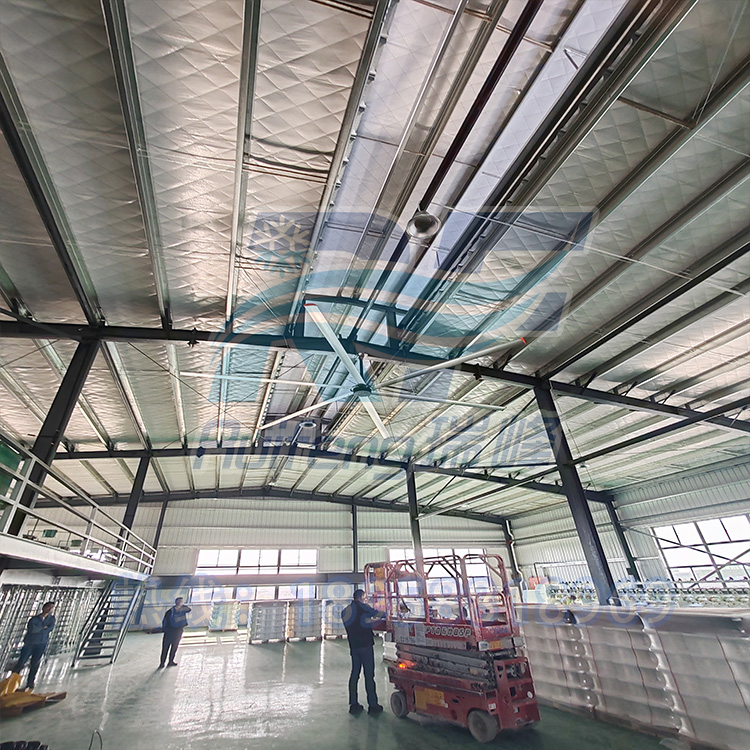
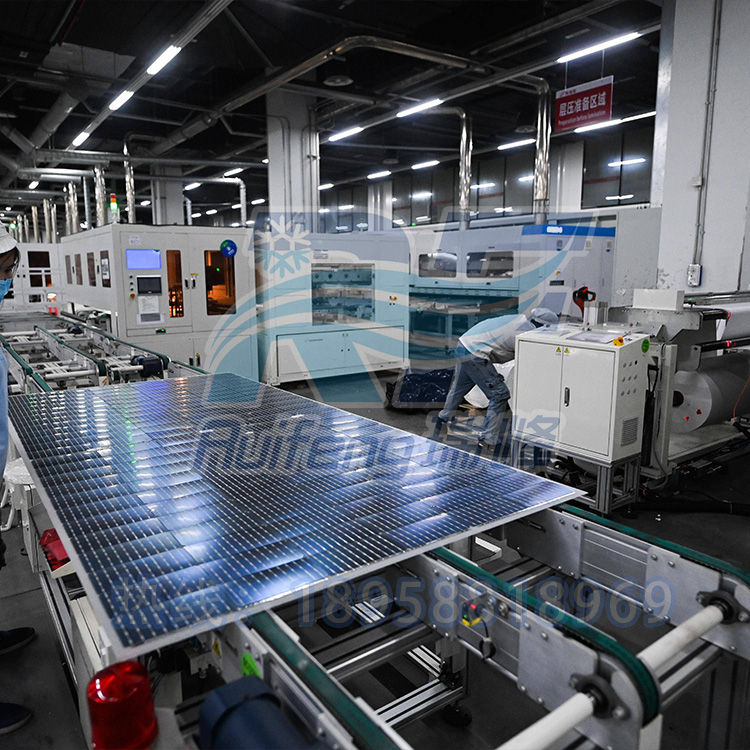
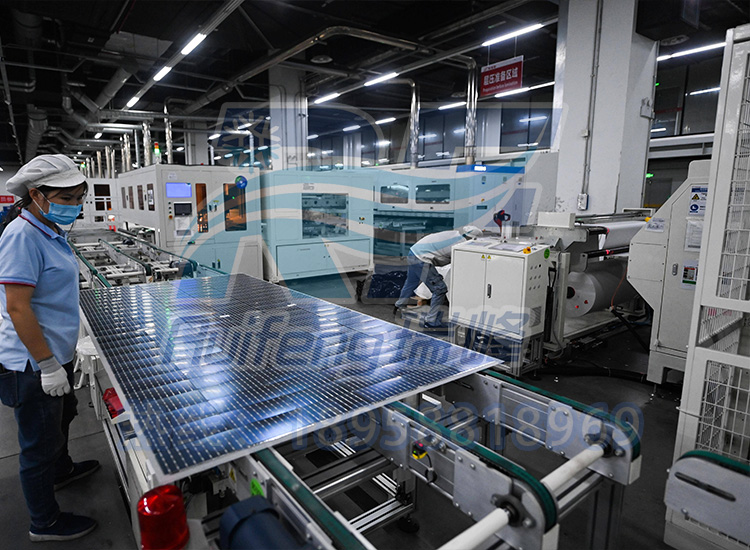
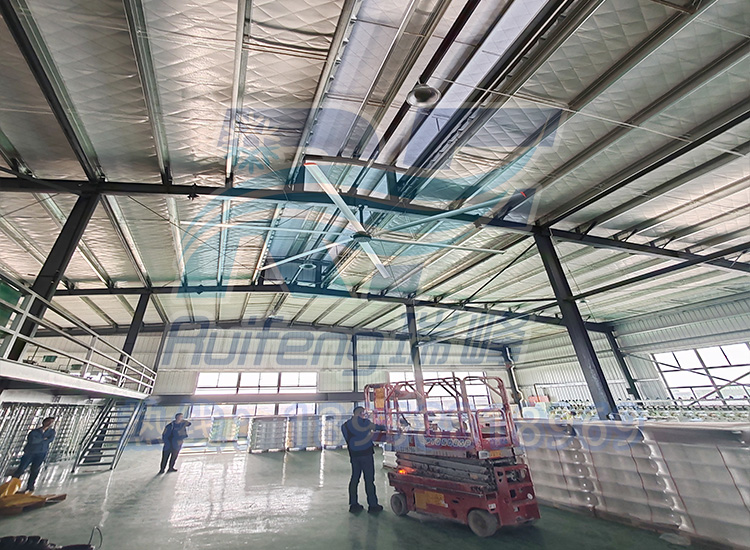
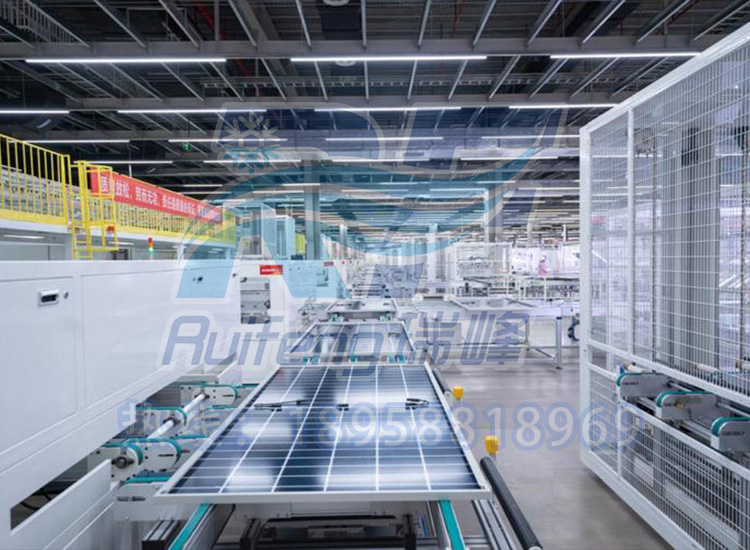
As a key link in the photovoltaic industry chain, this enterprise mainly engages in photovoltaic module packaging and deep processing of photovoltaic glass. The production workshop is a large-span steel structure shed style building with a total area of over 28000 square meters and a height of 17 meters. The photovoltaic module production line in the workshop is long and continuous. In order to meet the requirements of automated assembly lines, AGV (Automated Guided Vehicle) channels, and intricate bridge layouts, the workshop has reserved a high and empty physical space. However, this tall space is prone to heat accumulation in summer, and coupled with continuous heat dissipation from production line equipment, the temperature inside the workshop is much higher than outside, which not only affects the comfort of frontline employees, but also increases the safety risks of high-temperature operations. Therefore, it is necessary to implement scientific and effective ventilation and cooling improvements.
When planning this project, the designers of Ruifeng Plan comprehensively considered multiple key factors: firstly, the humid and hot summers in Jiangsu region not only result in huge energy consumption for traditional fixed-point air conditioning, but also make it difficult to achieve uniform cooling in such a high and large space; Secondly, the photovoltaic packaging production process does not have strict precision control requirements for temperature and humidity, and the core pain points for improvement lie in "ventilation" and "airflow disturbance"; Furthermore, the heat dissipation of the production line equipment is concentrated, and there is an urgent need for an efficient solution that can effectively disturb the upper layer of hot air and discharge it outdoors, while providing a continuous soft airflow for the work area. Based on this, we abandoned complex temperature control equipment and chose the flagship product for ventilation and cooling in high-rise spaces - permanent magnet industrial ceiling fans.
In terms of scheme layout, the Ruifeng team fully utilized the core advantages of permanent magnet industrial ceiling fans. We accurately calculate the required fan model and quantity based on the workshop span, production line layout, and airflow organization requirements. The product we have chosen has a single unit coverage area of up to 2000 square meters, far exceeding non industrial traditional ceiling fans, greatly reducing installation quantities and construction costs. The core of it lies in the use of permanent magnet synchronous high-temperature resistant outer rotor motor, which realizes direct drive transmission, not only eliminating the reducer link and achieving true maintenance free, but also significantly reducing the operating electricity cost for the factory with its super energy-saving and high-efficiency characteristics. At the same time, the design of wing shaped fan blades and energy-saving tail fins perfectly integrates biomimetic fluid dynamics and aerodynamics, producing only a soft low-frequency natural wind sensation during operation, with extremely low noise, but able to cover every corner of the workshop with the airflow pushed by the huge blades. This is the technical foundation for us to achieve efficient airflow circulation in ultra large spaces.
From a physical perspective, permanent magnet industrial ceiling fans do not directly lower the air temperature. Instead, they use their large diameter, slow rotating blades to push the accumulated hot air from high altitude down to the ground, forming a thick "air wall" of 1-3 meters on the ground. The airflow then spreads around the ground and flows back upwards when encountering walls or obstacles, creating a three-dimensional circulation airflow similar to "natural wind". This cycle not only quickly takes away the heat on the surface of the human body, resulting in a 3-5 ℃ decrease in perceived temperature, but also effectively breaks the "thermal dome" formed by equipment heat dissipation in the workshop, forcing heat out of the room, thus constructing a dynamic and healthy air ecosystem in a vast space of over 28000 square meters. After the equipment is put into use, the stuffiness in the workshop is significantly eliminated, and the air flow is greatly enhanced. Front line workers generally feedback that the comfort of the working environment has been qualitatively improved, and their labor enthusiasm and production efficiency have also increased accordingly.
The production workshop project undertaken by Ruifeng Environmental Protection Refrigeration for a photovoltaic manufacturing enterprise serves a specific industry, but its successful experience has a wide demonstration effect. Similar scenarios, such as large logistics warehouses, mechanical processing workshops, high-speed railway station waiting halls, large shopping mall courtyards, livestock farms, and other super tall spaces, also face difficulties such as poor ventilation and concentrated heat dissipation of personnel and equipment. These mature solutions can be seamlessly reused. The successful implementation of this project not only validates the comprehensive selection ability and refined design strength of the Ruifeng team in dealing with super tall and special spaces and meeting the production requirements of special industries, but also demonstrates our firm commitment to providing customers with "safe, energy-saving, efficient, and comfortable" environmental solutions.
More cases