




1. Two Authorities: Further Optimize Review and Identification Procedures for Dual-Use Items Export Control
On October 19, the Ministry of Commerce and the General Administration of Customs issued an Announcement on Matters Concerning Further Optimizing the Review and Identification Procedures for Dual-Use Items Export Control. The document clarifies handling time limits for relevant authorities and improves classification arrangements for goods. Export control is closely linked to national security, development interests, and normal foreign trade activities of enterprises. By optimizing procedures and boosting efficiency, the policy delivers clearer expectations and practical conveniences for exporters. It serves as an important measure to improve export control administration and services. Targeting the real concerns of exporting companies, this practical regulation standardizes official handling and facilitates legitimate trade, sending a clear policy signal that authorities actively respond to corporate demands and support business growth.

2. Drones, Tunnel Boring Machines, Dredgers Included in Export License Administration
In accordance with the Export Control Law of the People’s Republic of China and other laws and regulations, the Ministry of Commerce, together with relevant authorities, released announcements on implementing export control over tunnel boring machines and adjusting control measures for dredgers on October 19. The new rules take effect on November 18. Among them, tunnel boring machines are newly added to the export control list, while control measures for drones and dredgers are revised and optimized based on existing regulations.
3. Ministry of Commerce: Guidance on 2027 Automobile and Motorcycle Export License Application
The General Office of the Ministry of Commerce released a notice on the 2027 automobile and motorcycle export license filing work. To standardize export order for automobiles and motorcycles, the online application channel will be adopted, in line with Notice No. Shang Chan Fa〔2012〕318. The 2027 online application system will be opened on September 30, 2026.
4. CCPIT to Officially Launch Electronic Commercial Certificates in November
China Council for the Promotion of International Trade (CCPIT) will issue its first electronic commercial certificate in November 2026, with full rollout scheduled for 2027. The system supports online document submission, AI-assisted intelligent declaration and review, digital approval and issuance, and online certificate collection. Enterprises no longer need to submit or mail hard-copy documents. The whole procedure can be completed remotely, greatly cutting labor, transportation and courier costs while shortening lead time.

5. China-EU Trade Consultation Reaches 16 Key Consensus
From October 8 to 9, Wang Wentao, Minister of Commerce of China, and Maroš Šefčovič, European Commissioner for Trade and Economic Security, held the second regular meeting under the China-EU Trade and Investment Consultation Mechanism in Beijing. According to the consensus list released by Xinhua News Agency, both sides reached 16 agreements covering four pillars: trade and investment balance, export control, intellectual property rights and WTO reform. Notably, important consensus was reached on electric vehicles and hybrid electric vehicles: the two sides reached an understanding on trade of hybrid vehicles consistent with WTO rules. Both sides recalled the guidance document on price undertakings in the EV anti-subsidy case and will continue relevant procedures for corporate price undertakings and reviews.
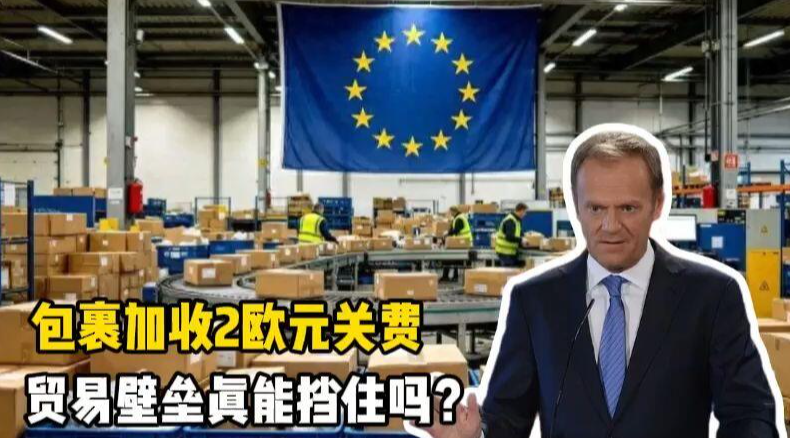
6. EU: €2 Handling Fee Per Product Category for Direct Mail Parcels from Nov 1
The EU will levy an extra €2 administrative fee on parcels shipped directly to consumers from non-EU territories starting November 1. Regardless of parcel value, €2 will be charged for each distinct product category inside one shipment. For example, a parcel with 10 T-shirts incurs a €2 fee; a parcel containing 2 hats plus 10 T-shirts is charged €4. This new charge comes on top of the existing €3 customs duty on small parcels valued below €150, which took effect in July.
7. EU Revokes Anti-dumping and Countervailing Duties on Chinese Solar Glass
On October 21, 2026, the European Commission published an announcement formally repealing definitive anti-dumping and countervailing duties on solar glass originating in China. The repeal enters force on October 22, the day after publication in the Official Journal of the EU. The covered product is tempered soda-lime flat solar glass under EU customs code ex 7007 19 80 and relevant TARIC codes, subject to technical specifications on iron content, light transmittance, heat resistance, thermal shock resistance and mechanical strength.
8. EU REACH New PFHxA Restriction Enforced on October 10
On October 10, 2026, Entry 79 of Annex XVII to EU REACH entered into force for the first batch of products: clothing and accessories for the general public (textile, leather and fur components), footwear, paper and paperboard in food contact (including pizza boxes, burger paper and baking paper), consumer mixtures and cosmetics. From this date onwards, products placed on the EU market must not contain PFHxA and its salts at or above 25 ppb, or the sum of related PFHxA substances at or above 1000 ppb (tested on homogeneous materials).
9. New FCC Chip-level Restriction Rule Takes Effect
A new regulation from the U.S. Federal Communications Commission (FCC) became effective locally on October 13. Any device incorporating chips, wireless modules or other logic-processing components manufactured by five entities including Huawei and ZTE on the Controlled List will be denied FCC certification required for U.S. market access. In June this year, the FCC had already banned imports and sales of certain legacy certified units approved before 2022. This new rule extends compliance down to component level and applies to all new certification applications submitted on or after October 13. Manufacturers, importers and EMS companies targeting RF and wireless products for the U.S. market must prove before filing that no logic hardware components inside the device are produced by restricted entities.

10. Türkiye Updates Phytosanitary Import Certificate Requirements
On October 26, 2026, Türkiye submitted addendum G/SPS/N/TUR/23/Rev.1/Add.6 to the WTO, updating special phytosanitary requirements for imported plants and plant products in Annex 4 of its Phytosanitary Regulation. The parent regulation was issued on May 6, 2026 and took effect on August 4; this addendum has no new public comment period. The key revision targets phytosanitary certificate supplementary declarations for fruits of Capsicum L. (peppers). Certificates must include three mandatory clauses:
- Required declaration text;
- Official inspection at origin within 3 months prior to export confirming no fall armyworm detected;
- Official inspection before shipment confirming no fall armyworm detected. Supplementary requirement: production sites are physically isolated from fall armyworm, or treated effectively to eradicate the pest. Compliance reminder: exporters of solanaceous fruits & vegetables, asparagus, corn, flower seedlings to Türkiye need official phytosanitary certificates from the country of origin with non-detection declarations for fall armyworm, plus full traceability records.
11. India Resumes Anti-dumping Duty on Chinese Titanium Dioxide
On October 24, 2026, the Central Board of Indirect Taxes and Customs (CBIC) of India issued Notification No. 26/2026-Customs (ADD), following remand by the Calcutta High Court. Anti-dumping duties are re-imposed on titanium dioxide originating in or exported from China, with rates unchanged at USD 460–681 per tonne for a duration of 5 years.
12. Pakistan Opens Commercial Imports of Used Vehicles
On September 30, 2026, the Engineering Development Board (EDB) under Pakistan’s Ministry of Industries and Production released an announcement opening commercial import channels for used vehicles, accompanied by strict new rules for safety inspection and documentation. Registered companies, sole proprietorships and partnerships holding sales tax or national tax IDs are eligible for this business, and vehicle trading should be their core business. Payments must be settled through formal banking channels. Importers shall maintain complete vehicle files and sign qualified service providers for after-sales support. Eligible used vehicles must comply with UNECE WP.29 safety and emission standards or equivalent schemes recognized by EDB, covering braking, airbags, tires, crash protection and exhaust emissions. Pre-shipment inspection by PSQCA-registered international inspection bodies is mandatory to verify accident history, odometer status, engine condition, glass integrity, airbag configuration, emissions and noise. Local representatives of the same inspection agency will verify document authenticity after arrival, with inspection costs borne by the importer.

13. Philippines Releases Mandatory Certification Rules for Light Electric Vehicles (LEV) & LEV Batteries
On October 20, 2026, the Philippines filed TBT notification G/TBT/N/PHL/378: mandatory product certification technical regulation for light electric vehicles and their batteries. This Department Administrative Order (DAO) sets compulsory certification requirements for LEVs and LEV batteries imported, manufactured, distributed or sold locally, to meet Philippine National Standards (PNS) on electrical safety and protect consumers from electric shock, malfunction, overheating, thermal runaway, fire and other hazards. The regulation also supports safe and reliable adoption of electric mobility through mandatory conformity assessment.
14. Bangladesh Cuts Import Tax on Solar Equipment from 17% to 1%
Bangladesh National Board of Revenue (NBR) issued a tax relief order reducing the combined import tax rate for solar equipment from 17% to 1%. This incentive is newly extended to commercial importers and remains valid for 180 days from the date of the official order. Previously the category was subject to 15% VAT plus 2% withholding tax, totaling 17%. The scope includes solar panels, mounting structures, lithium batteries for PV systems, inverters, BMS and monitoring controllers. Conditions apply: lithium batteries must come with manufacturer certificates confirming they are brand-new and compliant with IEC 62619:2022. Importers and the Bangladesh Sustainable & Renewable Energy Association shall jointly commit that the goods are only used for solar projects. Clearance requires review by an Assistant Commissioner or Deputy Commissioner of Customs.
15. Malaysia Implements No Manifest, No Loading Rule
Hapag-Lloyd published an operational notice enforcing a “No Manifest, No Loading” policy at major Malaysian ports under requirements from Royal Malaysian Customs Department (JKDM), enforced by terminal operators at Port Klang North Port, West Port and Tanjung Pelepas. Full and valid export K5 manifest or transshipment K6 manifest must be ready before container loading. The SI (shipping instruction) cut-off is no longer based on ETD, but on ETA at the Malaysian loading or transshipment port. Cargo exported from Malaysia or transiting Malaysia must submit SI 48 hours prior to vessel ETA.
16. Cambodia Imposes New Import Restrictions on Telecom Equipment
On September 22, 2026, Cambodia’s Telecommunication Regulator of Cambodia (TRC) issued an announcement banning imports, supply and distribution of counterfeit and second-hand telecom equipment. Relevant enterprises must complete compliance rectification within 60 days, by November 21, 2026. Restricted goods cover mobile phones, routers, network hardware, tablets, laptops and walkie-talkies. Core rules: only brand-new authorized products are permitted. All devices need TRC Type Approval (TA) certificates. Importers and distributors must hold Qualified Agent (QA) status or apply for Import Permits (IP).
17. Brazil Raises Import Tariffs on 28 Categories of Chemical Products to 20%
The Executive Management Board of Brazil’s Foreign Trade Chamber (Gecex) approved Resolutions No. 963 and 969, temporarily lifting import tariffs for 28 chemical products, most to 20%. Effective date: October 17, 2026, valid for 12 months until October 16, 2027. Scope: applies to imports from all non-preferential trade partners. Since there is no free trade agreement (FTA) between China and Brazil, Chinese-origin chemicals are subject to the increased tariff rates.